
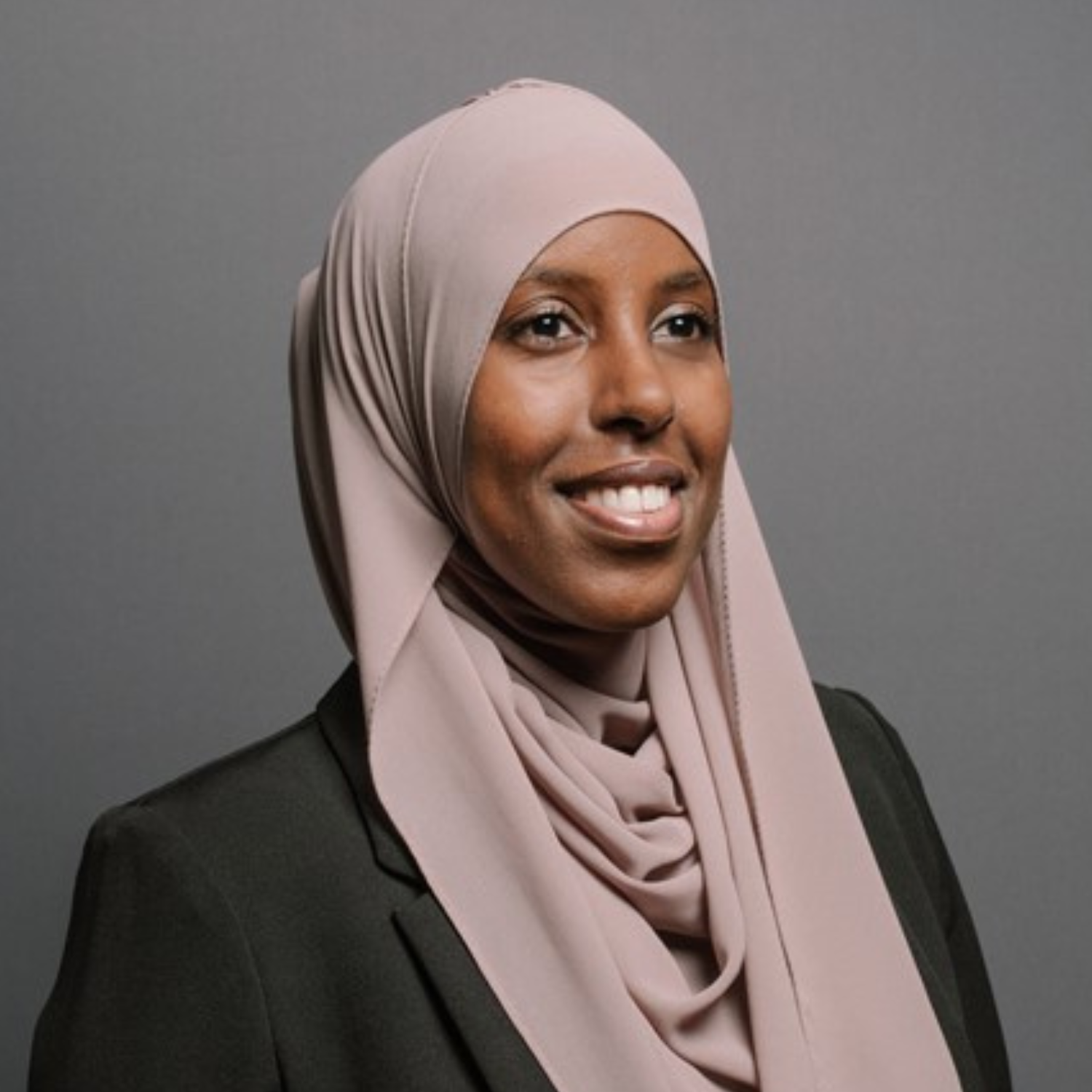
Dr Muna Abdi
Researcher, consultant, coach and speaker — and, underneath all of it, someone trying to close the gap between what institutions say they value and what they're actually willing to be accountable for.
I'm a Somali, Black, Muslim woman, and a mother, and none of that sits outside my professional work. It's part of how I read a room, what I notice that often goes unsaid, and why I find it difficult to treat racial equity as a workstream that can be separated from everything else an organisation does.
Different doors, same commitment
Each of these is a genuine part of the work, not a job title collected for effect. Together, they're how the same underlying questions get explored from different angles.

Researcher
Designing and leading research that takes community knowledge as seriously as institutional data, and that's honest about where the two disagree.

Speaker
Speaking on racial equity, belonging, research justice and sustainable leadership for universities, public bodies and conferences.

Consultant
Working with organisations on racial equity strategy and organisational change, through MA Consultancy, where the brief is honesty as much as delivery.

Creator of the CORE Framework
CORE, Community Power, Ongoing Accountability, Reciprocity and Ethics Beyond Compliance, sets out what research partnerships owe the communities they involve.

Leadership coach
Founder of BOLD, working one-to-one and in groups with women navigating leadership, transition and the question of what comes next.

Former academic, practising researcher
My academic training shapes how I work, but this practice now sits outside a university department, by choice, and that's part of the story too
Lived experience and professional perspective aren't two separate things here.
I've spent a lot of my working life inside institutions that talk fluently about inclusion and far less fluently about power. Being a Somali, Black, Muslim woman inside those spaces taught me to notice the difference between being present in a room and being able to change what happens in it.
That distinction, between presence and power, between being consulted and being accountable to, runs through everything on this site. It's the difference between belonging and assimilation: being fully yourself in a space, versus being tolerated as long as you don't ask for too much to change.
As a mother, I also think a great deal about what gets modelled, for the people I work with and for my own children, about what leadership, rest, ambition and boundaries are allowed to look like for women who look like me.
Three commitments that show up everywhere
Ethical research
Ethics approval is necessary. It is not the same as community accountability. Good research asks what happens to people, and to what they've shared, after the project ends.
Community accountability
Communities should have genuine authority over the questions being asked, not just a seat at a table whose agenda was set elsewhere.
Ethical research
Training days change very little on their own. Lasting change tends to come from changes to who holds power, who is accountable, and what happens when something goes wrong.
A few things that stay constant, whatever the project
01
I start by listening, properly
Before any strategy, framework or programme gets designed, I want to understand what's already been tried, what's been said before and ignored, and who in the room has the least power to say so.
02
I name the gap honestly
If there's a difference between what an organisation says about itself and what's actually happening, I'll say so directly, but constructively. Avoiding the conversation doesn't make the gap smaller.
03
I build with, not for
Whether it's a research design, a strategy, or a coaching programme, the people most affected should recognise their own thinking in the result, not just be consulted on someone else's.
04
I stay accountable after the official end date
A lot of harm happens in the gap after a project formally ends. I try to be honest about what I can and can't commit to, and to keep that commitment once I've made it.
Organisations and individuals, for different reasons
Universities & research institutions
On research ethics, community partnership, and what accountability looks like beyond ethics approval.
Community organisations
As partners in research and evaluation, and as the people CARE is ultimately accountable to.
Public bodies & government
On racial equity strategy, organisational culture, and policy that's been shaped with the communities it affects.
Women in leadership & transition
Through BOLD, one-to-one and in groups, at points of significant change.
Foundations & funders
On what funded research and programmes should require, and how to recognise genuine community accountability.
Event & media organisers
For keynotes, panels, workshops and podcast or media conversations on the themes across this site.